
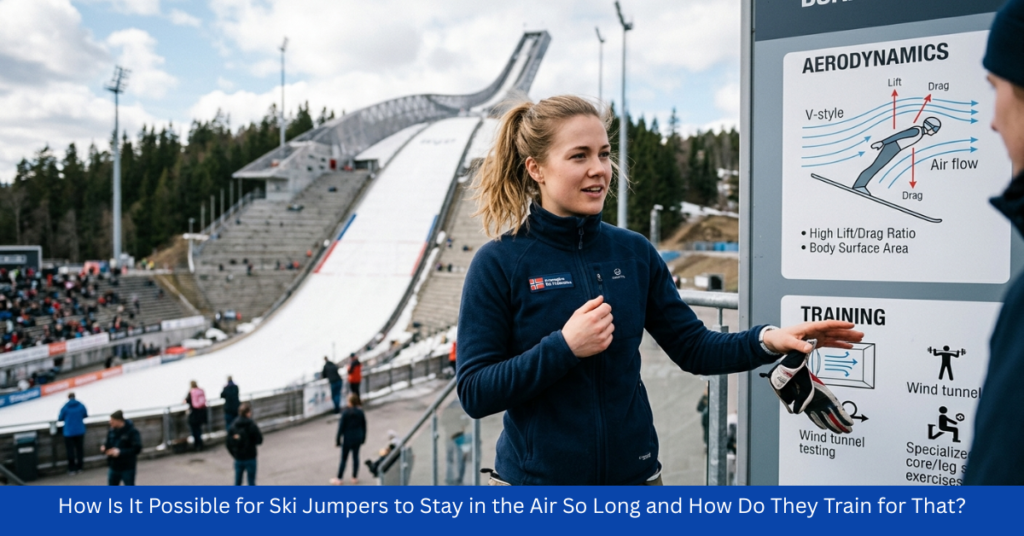

If you’ve ever watched ski jumping, you’ve probably wondered: how is it possible for ski jumpers to stay in the air so long and how do they train for that? It almost looks like they’re flying. For several seconds, athletes glide effortlessly over snow-covered slopes, covering distances that seem to defy gravity.
But there’s no magic involved—just a fascinating mix of physics, precision technique, and intense training. In this article, we’ll break down exactly how ski jumpers stay airborne and what it takes to train for such an extraordinary sport.
The Science Behind Staying in the Air
Aerodynamics: The Secret to “Flying”
At the heart of ski jumping is aerodynamics—the same principle that keeps airplanes in the sky. Ski jumpers position their bodies and skis to create lift, allowing them to stay airborne longer.
Here’s how it works:
- Lift generation: Air flows under the skis, pushing the jumper upward
- Drag control: A streamlined body reduces air resistance
- V-style technique: Skis are angled outward in a “V” shape to maximize surface area
This combination allows jumpers to “ride the air” rather than simply fall.
Speed and Takeoff Power
Before takeoff, athletes accelerate down a steep ramp, reaching speeds of up to 90 km/h (56 mph). That speed is crucial.
At the exact moment they reach the edge:
- They explode upward with powerful leg extension
- Maintain perfect timing (even milliseconds matter)
- Transition instantly into a flight position
A slightly early or late takeoff can drastically reduce distance.
Body Position in Mid-Air
Once airborne, control becomes everything. Ski jumpers adopt a forward-leaning posture, almost parallel to their skis.
Key elements include:
- Head low, hips high for optimal airflow
- Arms held back to reduce drag
- Balance adjustments mid-flight
Even small shifts in posture can change how long they stay in the air.
How Do Ski Jumpers Train for That?
Understanding how is it possible for ski jumpers to stay in the air so long and how do they train for that isn’t complete without looking at their rigorous training routines.
Strength and Power Training
Explosive strength is essential, especially for takeoff.
Common exercises include:
- Squats and lunges
- Plyometric jumps (box jumps, depth jumps)
- Olympic lifts like cleans and snatches
These build the leg power needed to launch effectively.
Balance and Coordination Drills
Ski jumping demands incredible balance, both in the air and during landing.
Athletes train with:
- Balance boards and stability balls
- Slacklining
- Core-strength exercises
This helps maintain control during flight.
Aerodynamic Practice (Dryland Training)
Jumpers don’t just train on snow. They also practice body positioning on land.
Methods include:
- Wind tunnel testing
- Imitation jumps on training rigs
- Video analysis for posture correction
These techniques refine how they interact with airflow.
Mental Training and Focus
Ski jumping is as much mental as it is physical.
Athletes work on:
- Visualization techniques
- Reaction timing
- Confidence under pressure
Standing at the top of a jump requires serious mental strength.
On-Snow Practice
Of course, real jumps are essential.
Training sessions focus on:
- Perfecting takeoff timing
- Improving flight stability
- Mastering smooth landings
Consistency is key—elite jumpers repeat these movements thousands of times.
Equipment That Makes a Difference
Specialized Skis
Ski jumping skis are longer and wider than regular skis, helping increase lift.
Suits Designed for Airflow
Jump suits are carefully regulated to balance aerodynamics and fairness. They trap just enough air to aid lift without giving unfair advantage.
Boots and Bindings
Flexible boots allow jumpers to lean forward and maintain optimal flight position.
Why They Don’t Just Fall Like a Rock
It might seem like gravity should pull them straight down—but the combination of:
- Forward speed
- Lift from air pressure
- Optimized body position
…creates a gliding effect rather than a simple drop. That’s why ski jumpers can stay in the air for several seconds and travel over 200 meters in elite competitions.
FAQs
How long do ski jumpers stay in the air?
Typically, between 5 to 10 seconds depending on the jump size and conditions.
How far can ski jumpers go?
Professional athletes can exceed 200 meters (656 feet) on large hills.
Is ski jumping dangerous?
Yes, it carries risks, but strict safety measures and training reduce the chances of serious injury.
Do ski jumpers train year-round?
Absolutely. They train in gyms, on dry slopes, and on snow throughout the year.
What skills are most important?
Balance, timing, strength, and aerodynamics awareness are all critical.
Conclusion
So, how is it possible for ski jumpers to stay in the air so long and how do they train for that? It comes down to a perfect blend of science, skill, and discipline. From mastering aerodynamics to building explosive strength and mental focus, every detail matters.
The next time you watch a ski jumper glide through the air, you’ll know it’s not just a jump—it’s a carefully engineered flight. If you’re curious to explore more about winter sports or training techniques, there’s a whole world of fascinating insights waiting for you.