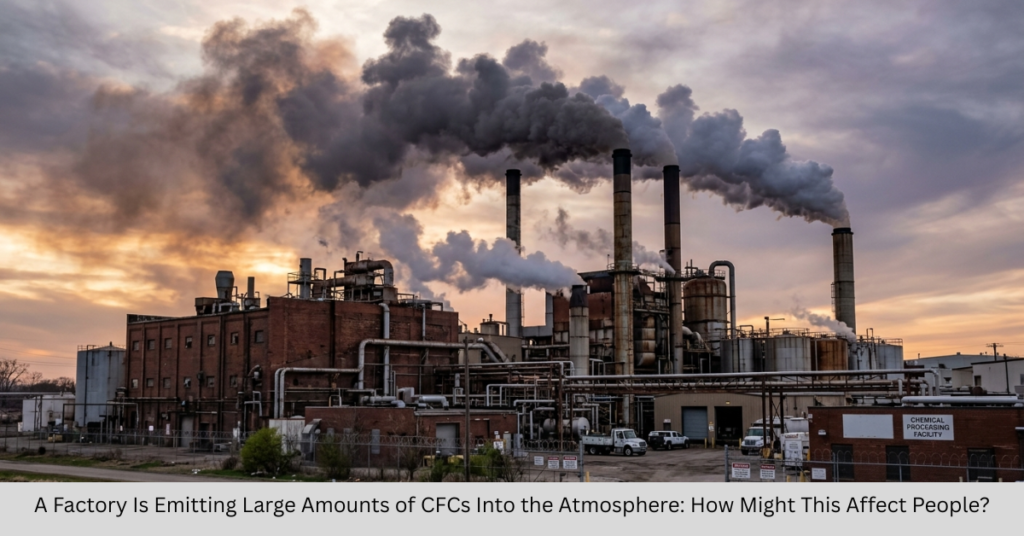

Imagine walking near an industrial area and knowing that a nearby factory is releasing harmful gases into the air every day. One of the most concerning scenarios is a factory is emitting large amounts of cfcs into the atmosphere. how might this affect people?
CFCs (chlorofluorocarbons) may sound like a technical term, but their impact is very real. These chemicals don’t just disappear into thin air—they rise, interact with the atmosphere, and slowly damage the protective layer that shields life on Earth. Even more importantly, they can indirectly affect human health in serious ways.
In this article, we’ll break down what happens when CFCs are released in large quantities, how they affect people, and why it matters more than most of us realize.
What Are CFCs and Why Are They Dangerous?
CFCs (chlorofluorocarbons) are man-made chemicals once widely used in:
- Refrigerators and air conditioners
- Aerosol sprays
- Foam-blowing agents
- Industrial cleaning processes
They were popular because they are stable and non-flammable. However, that same stability makes them dangerous for the environment.
Once released, CFCs rise into the upper atmosphere where they break down ozone molecules. This leads to ozone layer depletion, which increases the amount of harmful ultraviolet (UV) radiation reaching Earth.
So when we talk about a factory is emitting large amounts of cfcs into the atmosphere. how might this affect people?, we are really talking about a chain reaction that starts in industrial pollution and ends with health risks for humans.
How CFC Emissions Affect the Atmosphere
Before directly impacting humans, CFCs first damage the environment in a critical way.
Ozone Layer Depletion
The ozone layer acts like Earth’s sunscreen. CFCs break down ozone molecules, thinning this protective shield.
Increased UV Radiation
With a weaker ozone layer:
- More UV-B rays reach Earth
- Exposure levels rise globally
- Long-term environmental balance is disrupted
This environmental shift is the starting point of human health problems.
Health Effects on People
When exploring a factory is emitting large amounts of cfcs into the atmosphere. how might this affect people?, the answer mainly lies in increased UV exposure and indirect health risks.
1. Higher Risk of Skin Cancer
One of the most serious effects is increased skin cancer risk, including:
- Melanoma (most dangerous form)
- Basal cell carcinoma
- Squamous cell carcinoma
More UV radiation means DNA damage in skin cells becomes more likely over time.
2. Eye Damage and Vision Problems
Prolonged exposure to UV rays can lead to:
- Cataracts
- Photokeratitis (sunburn of the eye)
- Increased risk of macular degeneration
People working outdoors or in polluted regions are especially vulnerable.
3. Weakened Immune System
Scientific research shows that excessive UV exposure can suppress the immune system, making the body less effective at fighting infections.
4. Skin Aging and Burns
Even short-term effects include:
- Premature aging of the skin
- Sunburn
- Increased sensitivity to sunlight
Environmental Ripple Effects That Impact Humans
CFC emissions don’t just affect individuals—they affect entire ecosystems that humans depend on.
Damage to Food Chains
UV radiation can harm:
- Phytoplankton in oceans (base of marine food chain)
- Crop productivity on land
This can indirectly lead to food shortages or increased prices.
Climate Interactions
While CFCs are mainly known for ozone depletion, they are also potent greenhouse gases, contributing to global warming.
Why Industrial CFC Emissions Are So Serious
When we say a factory is emitting large amounts of cfcs into the atmosphere. how might this affect people?, it’s important to understand scale.
A single factory may seem small, but:
- CFCs remain in the atmosphere for decades
- They spread globally, not locally
- Even small continuous emissions accumulate over time
This makes industrial control critical.
Real-World Concerns and Regulations
Many countries have taken action through agreements like the Montreal Protocol, which aimed to phase out CFC production worldwide. However, illegal emissions or outdated industrial systems can still cause problems.
Key concerns include:
- Poorly regulated factories
- Illegal refrigerant use
- Improper disposal of cooling systems
How People Can Be Affected in Daily Life
Even if you’re far from the factory, the effects can reach you indirectly:
- Stronger sunlight exposure during daily activities
- Higher sunscreen dependency
- Increased healthcare risks over time
- Long-term environmental instability
This shows why industrial emissions are not just a local issue—they are global.
Prevention and Solutions
To reduce risks associated with CFC emissions, industries and governments can:
1. Replace CFCs with Safer Alternatives
Modern refrigerants like HFCs or natural refrigerants reduce ozone damage.
2. Improve Factory Regulations
Strict monitoring and enforcement of emission standards.
3. Proper Waste Management
Safe disposal of old cooling and aerosol systems.
4. Public Awareness
Educating people about environmental safety and reporting violations.
FAQs
1. What happens if a factory releases CFCs into the air?
It contributes to ozone layer depletion, increasing UV radiation exposure for humans and ecosystems.
2. Why are CFCs harmful to humans?
They indirectly increase UV radiation, leading to skin cancer, eye damage, and immune system suppression.
3. Can CFC exposure affect indoor air quality?
Not directly in small amounts, but long-term atmospheric damage affects overall environmental conditions.
4. Are CFCs still used today?
Most countries have banned or restricted them, but illegal use or old equipment can still cause emissions.
5. How can we protect ourselves from increased UV exposure?
Use sunscreen, wear protective clothing, avoid peak sunlight hours, and support environmental regulations.
Conclusion
Understanding a factory is emitting large amounts of cfcs into the atmosphere. how might this affect people? helps us see the bigger picture of industrial pollution. It’s not just about chemicals in the air—it’s about long-term human health, environmental stability, and global responsibility.
CFC emissions may be invisible, but their impact is powerful and lasting. By improving regulations, switching to safer alternatives, and staying informed, we can reduce risks and protect future generations.
If there’s one takeaway, it’s this: protecting the ozone layer means protecting ourselves.