

If you’ve ever wondered how to check oil, you’re already on the right track to keeping your car healthy and long-lasting. Engine oil is basically the lifeblood of your vehicle—it keeps parts moving smoothly, reduces friction, and prevents overheating.
In this guide, we’ll walk you through how to check oil level in car in a simple, practical way that anyone can follow. Whether you’re a new driver or just need a quick refresher, understanding how to check oil in car can save you from expensive repairs and unexpected breakdowns.
Why Engine Oil Matters
Before learning how to check oil level, it helps to understand why it’s so important.
Engine oil:
- Lubricates engine parts
- Reduces friction and wear
- Helps control engine temperature
- Keeps the engine clean by carrying away dirt and debris
Low or dirty oil can seriously damage your engine over time. That’s why regularly checking it is a must for every car owner.
When Should You Monitor Oil Level in Your Car?
Knowing how to check oil level in car is useful, but timing matters too.
You should check your oil:
- Once every 2–3 weeks
- Before long road trips
- When the engine warning light turns on
- If you notice unusual engine noise or overheating
A quick routine check can help you catch problems early and keep your engine in top condition.
Tools You Need for Checking Oil
Good news—you don’t need any special equipment for this.
Just have:
- A clean tissue or cloth
- A flat parking surface
- A few minutes of your time
That’s it. Learning how to check oil in car is one of the simplest maintenance tasks you can do yourself.
How to Check Oil in Car (Step-by-Step Guide)
Here’s a clear breakdown of how to check oil properly:
Step 1: Park Your Car Safely
Park your car on a flat surface and turn off the engine. Wait at least 5–10 minutes so the oil settles in the engine.
Step 2: Open the Hood
Locate the hood release lever inside your car and open the bonnet. Secure it properly with the support rod if needed.
Step 3: Find the Dipstick
Look for a small handle—usually yellow or orange. This is the oil dipstick used for checking engine oil levels.
Step 4: Pull Out and Clean the Dipstick
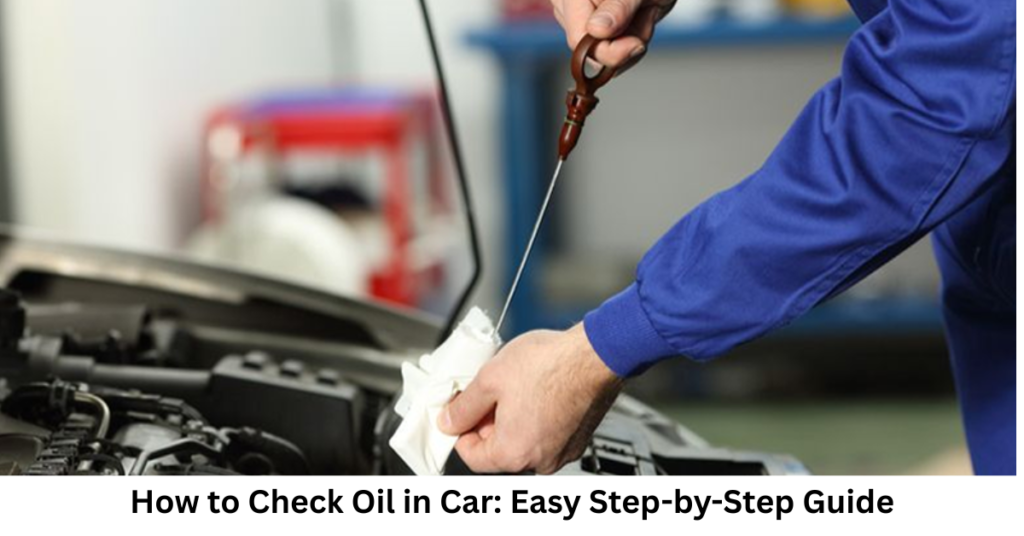
Pull it out completely and wipe it clean using a cloth or tissue. This ensures an accurate reading.
Step 5: Reinsert the Dipstick
Push it back in fully, then pull it out again slowly.
Step 6: Check the Oil Level
Look at the markings on the dipstick. The oil level should be between the “Min” and “Max” marks.
This is the simplest way to understand how to check oil level in car without any confusion.
Step 7: Assess Oil Condition
Good oil is usually amber or light brown. If it looks very dark or dirty, it might be time for an oil change.
Common Mistakes to Avoid
When learning how to check oil level, beginners often make a few errors:
- Checking oil immediately after turning off the engine
- Not wiping the dipstick before reading
- Ignoring low oil levels
- Overfilling the engine oil
Avoiding these mistakes ensures you get an accurate reading every time.
Helpful Tips for Better Engine Care
Here are some practical tips after you learn how to check oil in car:
- Check oil regularly, not just when there’s a problem
- Always use the recommended oil grade for your car
- Keep a small emergency oil bottle in your car
- Get oil changes as per your vehicle manual
These small habits can significantly extend your engine’s life.
Why Regular Oil Checks Are Important
If you ignore how to check oil, your car may suffer from:
- Reduced engine performance
- Poor fuel efficiency
- Engine overheating
- Costly repairs or engine failure
A simple 2-minute check can save you thousands in repair costs later.
FAQs
1. How often should I check oil level in car?
It’s best to check every 2–3 weeks or before long trips to ensure everything is running smoothly.
2. Can I check oil when the engine is hot?
It’s better to wait a few minutes after turning off the engine for an accurate reading.
3. What happens if oil level is low?
Low oil can cause friction, overheating, and serious engine damage if ignored.
4. How do I know if my oil needs changing?
If the oil is very dark, gritty, or smells burnt, it’s time for a change.
Conclusion
By regularly learning how to check oil level in car and keeping an eye on your engine health, you can avoid major issues and keep your vehicle running smoothly for years.
Make it a habit, stay consistent, and your car will thank you with better performance and reliability.