
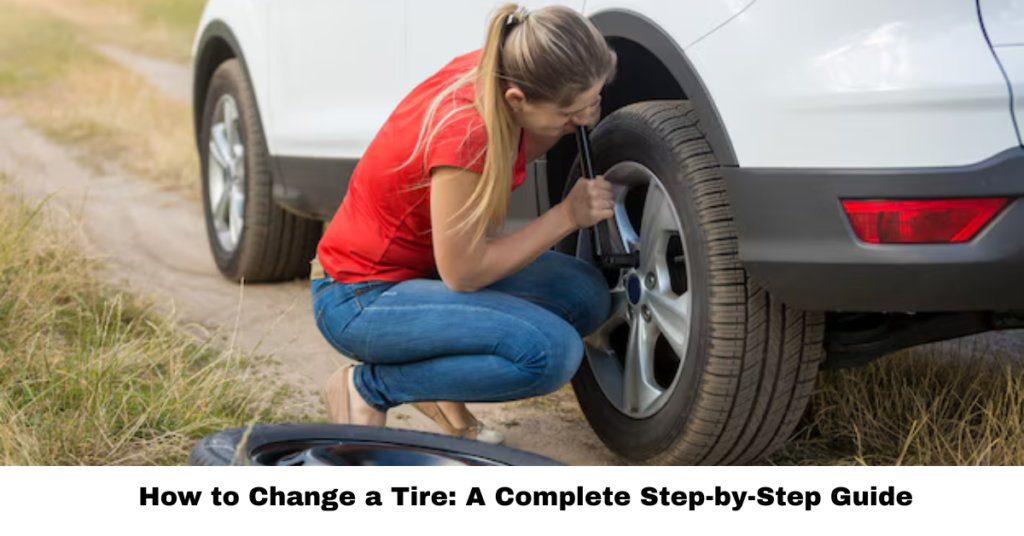

Picture this: you’re driving, everything’s fine—and suddenly, thump-thump. A flat tire. It’s one of those moments that can ruin your day if you’re not prepared.
Knowing how to change a tire isn’t just a handy skill—it’s essential. Whether you’re stuck on a highway or in your driveway, this guide will walk you through how to change a tire step by step in a way that’s simple, practical, and easy to follow.
Tools You Need Before You Start
Before jumping into the steps on how to change a tire, make sure you have these essentials in your car:
- Spare tire (properly inflated)
- Jack
- Lug wrench
- Wheel wedges (or a brick/stone)
- Flashlight (for night situations)
- Gloves (optional but helpful)
Pro tip: Check your spare tire every few months—many people forget, and it’s often flat when needed most.
How to Change a Tire Step by Step
1. Find a Safe Spot
Pull over to a flat, stable surface away from traffic. Turn on hazard lights immediately.
- Avoid slopes or soft ground
- Engage the parking brake
2. Secure the Vehicle
Place wheel wedges behind or in front of the tires to prevent rolling.
This step is often overlooked but critical for safety.
3. Loosen the Lug Nuts
Before lifting the car:
- Use the lug wrench
- Turn counterclockwise
- Don’t remove them fully—just loosen
4. Lift the Car with a Jack
Position the jack under the vehicle’s designated lifting point (usually near the tire).
- Raise the car until the tire is off the ground
- Ensure the car is stable before proceeding
This is a key part of how to change a tire with a jack safely.
5. Remove the Flat Tire
Now fully remove the loosened lug nuts and gently pull the tire off.
Place it flat on the ground to avoid rolling.
6. Install the Spare Tire
Align the spare tire with the lug bolts and push it into place.
- Hand-tighten the lug nuts first
7. Lower the Vehicle
Slowly bring the car back down using the jack.
Once the tire touches the ground, remove the jack completely.
8. Tighten the Lug Nuts Fully
Use the wrench to tighten the nuts in a crisscross pattern.
This ensures even pressure and keeps the tire secure.
How to Change a Tire Without a Jack
In rare situations where a jack isn’t available:
- Use a raised surface like a curb
- Carefully drive the flat tire onto it (only slightly)
- Replace with spare if accessible
This is risky and should only be a last resort. Always prioritize safety.
How to Change a Tire on a Bike
The process is slightly different:
- Remove the wheel
- Deflate completely
- Use tire levers to remove the tire
- Replace or patch the inner tube
- Reassemble and inflate
This is useful if you’re learning how to change a tire on a bike quickly during a ride.
How to Change a Tire on Different Vehicles
Car / Truck
The process remains mostly the same, though trucks may require a stronger jack.
Travel Trailer
- Use stabilizers
- Block wheels firmly
- Follow the same removal process
Riding Lawn Mower
- Lift with a small jack
- Remove axle clip (not lug nuts)
- Replace and secure
Additional Tire-Related Tasks
How to Change a Tire Valve Stem
- Remove the tire from the rim
- Replace the old valve stem
- Reinflate the tire
How to Change a Tire Pressure Sensor (TPMS)
- Remove the tire from the rim
- Replace or reprogram the sensor
- Reinstall and calibrate
These tasks often require professional tools.
Helpful Tips for Beginners
- Practice at home once—it builds confidence
- Keep your tools organized
- Never rush when changing a tire
- Drive slowly after installing a spare
FAQs About Changing a Tire
1. How long does it take to change a tire?
Usually 15–30 minutes, depending on experience.
2. Can I drive long distances on a spare tire?
No. Most spare tires are temporary—limit to 80 km/h and short distances.
3. What if lug nuts are too tight?
Use body weight on the wrench or a breaker bar for extra leverage.
4. Is it safe to change a tire alone?
Yes, if you follow safety precautions and choose a secure location.
5. Do I need to replace the flat tire afterward?
Yes. Visit a tire shop to repair or replace it as soon as possible.
Conclusion
Learning how to change a tire step by step is one of those life skills you don’t think about—until you really need it. The good news? It’s simpler than it seems.
With the right tools and a calm approach, you can handle a flat tire confidently anywhere. Keep practicing, stay prepared, and you’ll never feel stuck again.