
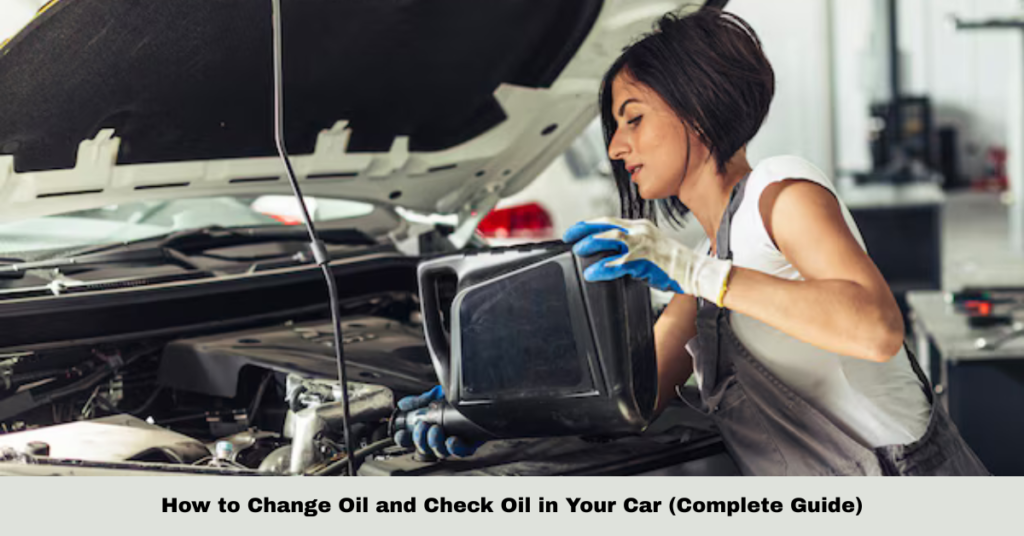

If you want your car to run smoothly for years, learning how to change oil and how to check oil in a car is one of the most important skills you can have. Engine oil is like the lifeblood of your vehicle—it keeps everything lubricated, cool, and functioning properly.
Ignoring oil maintenance can lead to poor performance, engine damage, or even complete failure. The good news? You don’t need to be a mechanic to do it yourself.
In this guide, I’ll walk you through everything—from how to check oil level to changing oil in different vehicles like cars, diesel trucks, and even lawn mowers.
Why Engine Oil Matters
Before diving into the process, let’s quickly understand why oil is so important:
- Reduces engine friction
- Prevents overheating
- Removes dirt and sludge
- Extends engine life
Whether you’re learning how to change oil in a car or how to check oil pressure, it all starts with proper maintenance.
How to Check Oil in a Car (Step-by-Step)
Checking your oil regularly is simple and takes less than 5 minutes.
1. Park on a Flat Surface
Make sure your car is on level ground and the engine is turned off for at least 5–10 minutes.
2. Locate the Dipstick
Open the hood and find the dipstick (usually has a yellow or orange handle).
3. Remove and Clean the Dipstick
Pull it out, wipe it with a clean cloth, and reinsert it fully.
4. Check Oil Level with Dipstick
Pull it out again and observe:
- Oil should be between MIN and MAX marks
- If low, you need to add oil
This is the standard method for how to check oil level on dipstick or how to check oil stick.
5. Check Oil Color
Healthy oil is:
- Light brown or amber → Good
- Dark black or gritty → Needs changing
This step helps you understand how to check oil color.
6. Check Dashboard Indicators
Modern cars show oil warnings:
- Oil pressure light
- Oil level indicator
Useful for knowing how to check oil level on dashboard.
How to Change Oil in a Car (Step-by-Step)
Now let’s move to the main task: how to change oil in your car.
Tools You’ll Need
- Engine oil (correct grade)
- Oil filter
- Wrench
- Oil pan
- Funnel
- Gloves
Step 1: Warm Up the Engine
Run the engine for 2–3 minutes to warm the oil (it flows better).
Step 2: Drain Old Oil
- Place an oil pan under the drain plug
- Unscrew the plug and let oil drain completely
Step 3: Change Oil Filter
This is crucial for how to change oil filter:
- Remove old filter
- Apply a little oil to the new filter gasket
- Install the new filter
Step 4: Add New Oil
- Tighten drain plug
- Pour new oil using a funnel
Step 5: Check Oil Level
After filling, use the dipstick again to ensure correct level.
How to Change Oil in Different Vehicles
How to Change Oil in a Diesel Truck
Diesel engines require thicker oil and larger capacity:
- Follow same steps as a car
- Use diesel-specific oil
- Replace heavy-duty oil filter
This applies to how to change oil diesel engine and how to change oil in diesel truck.
How to Change Oil in a Lawn Mower
Push Mower
For how to change oil in push mower:
- Remove oil cap
- Tilt mower to drain oil
- Refill with fresh oil
Riding Lawn Mower
For how to change oil in riding lawn mower:
- Drain via plug or tube
- Replace filter (if available)
- Refill oil
How to Change Oil in a Snowblower
- Drain old oil
- Refill with winter-grade oil
- Check level carefully
How to Change Oil in a Honda Civic
The process is similar to most cars:
- Use recommended oil (usually 5W-30 or 0W-20)
- Replace filter
- Reset maintenance light afterward
Advanced Oil Maintenance Tasks
How to Change Oil Pressure Sensor
- Locate sensor near engine block
- Disconnect wiring
- Unscrew old sensor and replace
How to Check Oil Pressure in Car
- Use a mechanical gauge
- Compare readings with manufacturer specs
How to Change Oil Pan Gasket
- Drain oil
- Remove oil pan
- Replace gasket
- Reinstall and refill oil
How Often Should You Change Oil?
General guideline:
- Every 5,000–10,000 km (cars)
- Diesel engines: more frequent checks
- Lawn equipment: every season
Common Mistakes to Avoid
- Overfilling oil
- Using wrong oil grade
- Not replacing oil filter
- Ignoring oil color or smell
FAQs
1. How to check oil level correctly?
Use a dipstick on a cool engine and ensure oil is between MIN and MAX marks.
2. How often should I check oil in my car?
At least once every 2 weeks or before long trips.
3. Can I change oil myself?
Yes, if you follow proper steps and use the right tools.
4. What happens if oil is low?
It can cause engine overheating and serious damage.
5. How to check oil pressure without tools?
Watch dashboard warning lights, though a gauge is more accurate.
6. How to check oil temperature without thermometer?
You can’t measure precisely, but overheating signs include burning smell or warning lights.
7. Do diesel engines need different oil?
Yes, they require heavier-duty oil designed for diesel engines.
Conclusion
Learning how to replace oil and how to check oil in your car isn’t just about saving money—it’s about protecting your engine and extending your vehicle’s life.
With just a few tools and a little time, you can handle everything from how to check oil level to how to change oil in a diesel engine or even a lawn mower.
Start by checking your oil today. If it looks dirty or low, don’t wait—take action. Your engine will thank you for it.