

Feeling constantly stressed, tired, or wired at the wrong times? Your body’s stress hormone, Cortisol, might be out of balance. Understanding how to check cortisol levels is an important step toward identifying issues related to stress, sleep, and overall health.
In this guide, we’ll break down everything you need to know—from the different testing methods to when and why you should get tested. Whether you’re dealing with chronic fatigue or simply curious about your hormone health, this article will walk you through it in a clear, practical way.
What Is Cortisol and Why Does It Matter?
Cortisol is a hormone produced by your adrenal glands. It plays a key role in:
- Regulating metabolism
- Controlling blood sugar levels
- Managing stress response
- Supporting your sleep-wake cycle
Your cortisol levels naturally rise in the morning and fall at night. When this rhythm gets disrupted, it can lead to health issues.
Signs You May Need to Check Cortisol Levels
Before diving into how to check cortisol levels, it’s important to recognize the symptoms that may indicate an imbalance.
Common Symptoms of High Cortisol
- Weight gain, especially around the abdomen
- Anxiety or irritability
- High blood pressure
- Trouble sleeping
Symptoms of Low Cortisol
- Chronic fatigue
- Dizziness
- Low blood pressure
- Muscle weakness
If you notice several of these symptoms, testing may be a good idea.
How to Check Cortisol Levels: Main Testing Methods
There are three primary ways doctors measure cortisol. Each method has its own benefits depending on your situation.
1. Blood Test (Serum Cortisol Test)
This is the most common method.
How it works:
- A blood sample is taken, usually in the morning
- Sometimes repeated in the afternoon for comparison
Why timing matters:
Cortisol follows a daily rhythm, so testing at specific times helps give accurate results.
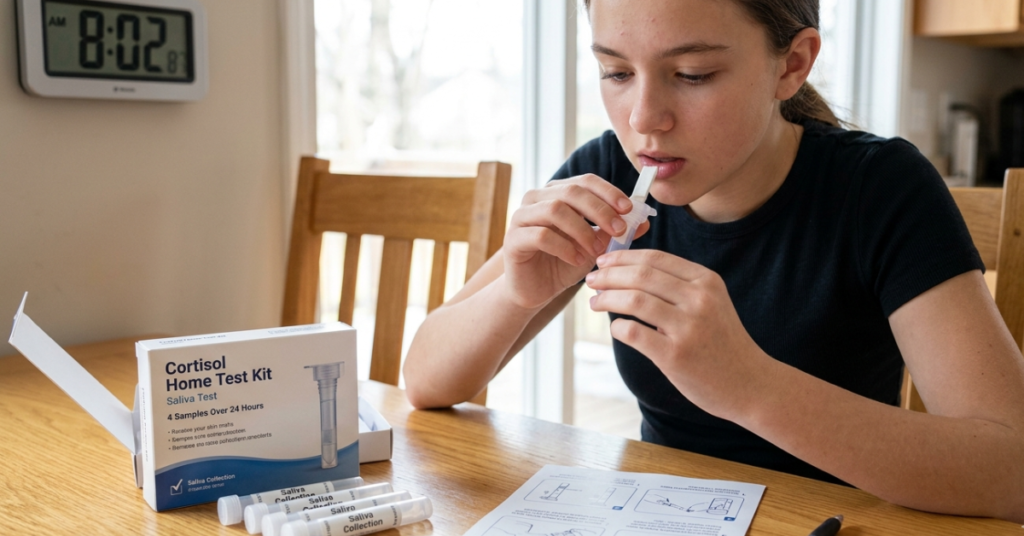
2. Saliva Test (At-Home Friendly Option)
Saliva testing is becoming increasingly popular because it’s simple and non-invasive.
How it works:
- You collect saliva samples at different times of the day
- Usually done at home
Best for:
- Tracking daily cortisol patterns
- Identifying stress-related imbalances
3. Urine Test (24-Hour Cortisol Test)
This method measures cortisol production over an entire day.
How it works:
- You collect urine over 24 hours
- The sample is analyzed in a lab
Best for:
- Detecting conditions like Cushing’s Syndrome
- Getting a full picture of cortisol output
When Is the Best Time to Test Cortisol?
Timing is everything when checking cortisol levels.
- Morning (6–8 AM): Peak cortisol levels
- Evening (around midnight): Lowest levels
Doctors often compare these values to see if your natural rhythm is functioning properly.
Preparing for a Cortisol Test
To get accurate results, follow these simple tips:
- Avoid caffeine before testing
- Reduce stress as much as possible
- Inform your doctor about medications
- Follow fasting instructions if required
Even small factors can affect cortisol readings, so preparation matters.
What Do the Results Mean?
Understanding your results is just as important as testing.
Normal Range
Cortisol levels vary depending on the time of day and test type, but generally:
- Morning levels are higher
- Evening levels are lower
High Cortisol May Indicate:
- Chronic stress
- Hormonal disorders
- Adrenal gland issues
Low Cortisol May Indicate:
- Addison’s Disease
- Pituitary gland problems
- Long-term steroid use
Always consult a healthcare professional for proper interpretation.
Can You Check Cortisol Levels at Home?
Yes, you can.
At-home saliva test kits are widely available and easy to use. While they’re convenient, they may not be as comprehensive as lab tests.
Tip: Use home tests for initial insights, but confirm results with a doctor if needed.
Natural Ways to Support Healthy Cortisol Levels
If your levels are slightly off, lifestyle changes can help:
- Practice stress management (meditation, deep breathing)
- Get consistent sleep
- Exercise regularly (but avoid overtraining)
- Maintain a balanced diet
These habits can make a noticeable difference over time.
FAQs
1. How do I know if my cortisol levels are high?
Common signs include weight gain, anxiety, and sleep problems. Testing is the only way to confirm.
2. Can stress alone affect cortisol levels?
Yes, chronic stress is one of the biggest factors influencing cortisol imbalance.
3. Is a cortisol test painful?
Not really. Blood tests involve a small needle, while saliva and urine tests are painless.
4. How long does it take to get results?
Most lab results are available within 24–48 hours.
5. Do I need a doctor to check cortisol levels?
You can start with at-home kits, but a doctor is recommended for accurate diagnosis and treatment.
Conclusion
Understanding how to check cortisol levels can give you valuable insights into your stress, energy, and overall health. Whether you choose a blood test, saliva test, or urine analysis, each method offers a unique window into how your body is functioning.
If you’re experiencing symptoms or simply want to stay proactive, testing is a smart first step. From there, you can take control—whether that means lifestyle changes or medical guidance.
Take charge of your health today—because when your cortisol is balanced, everything else tends to fall into place.