
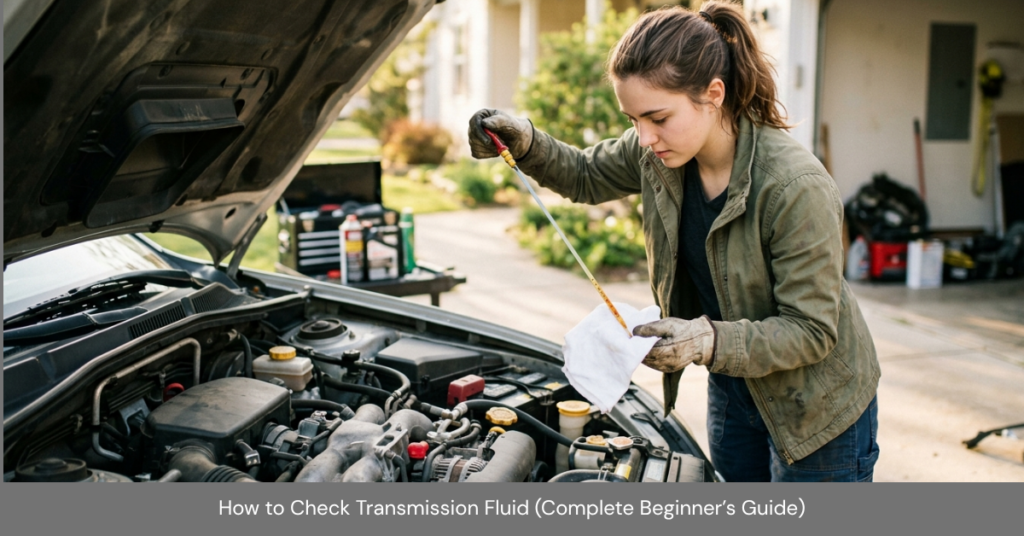

Ever noticed your car hesitating between gears or making unusual noises? Before jumping to expensive repairs, the issue might be as simple as low transmission fluid. Knowing how to check transmission fluid can save you time, money, and stress.
In this guide, you’ll learn exactly how to check transmission fluid in a car, whether your vehicle has a dipstick or not. We’ll also cover tips for popular models like trucks, sedans, and SUVs—so you can handle this essential maintenance task with confidence.
Why Transmission Fluid Matters
Transmission fluid keeps your vehicle running smoothly by:
- Lubricating moving parts
- Cooling the transmission system
- Ensuring smooth gear shifts
- Preventing wear and tear
Low or dirty fluid can lead to serious transmission damage—so checking it regularly is a must.
How to Check Transmission Fluid in a Car (Step-by-Step)
Step 1: Warm Up Your Engine
Start your car and let it run for about 5–10 minutes. Transmission fluid expands when warm, giving you an accurate reading.
Step 2: Park on a Level Surface
Make sure your car is parked on flat ground and the parking brake is engaged.
Step 3: Locate the Transmission Dipstick
Open the hood and find the dipstick. It’s usually labeled and may have a red or yellow handle.
Step 4: Pull and Wipe the Dipstick
- Remove the dipstick
- Wipe it clean with a cloth
- Reinsert it fully
Step 5: Check the Fluid Level
Pull it out again and check where the fluid reaches. This is how you check transmission fluid level accurately.
Step 6: Inspect Fluid Condition
Healthy transmission fluid should be:
- Pink or red
- Clear (not dark or burnt-smelling)
How to Check Transmission Fluid Without a Dipstick
Some modern vehicles don’t have a dipstick, making it trickier to check.
Here’s how to handle it:
- Locate the transmission fluid check plug (under the vehicle)
- Ensure the car is level and running
- Remove the plug carefully
- Fluid should slightly trickle out if levels are correct
If nothing comes out, the fluid is low. This is the standard method for how to check transmission fluid without dipstick setups.
Tip: If you’re unsure, consult a mechanic—this method can be messy and requires caution.
Common Vehicle-Specific Tips
How to Check Transmission Fluid F150
- Most Ford F-150 models use a dipstick
- Check fluid while engine is warm and running
How to Check Transmission Fluid Nissan Altima
- Older models: dipstick under the hood
- Newer models: sealed systems (no dipstick)
How to Check Transmission Fluid Chevy Silverado
- Use the dipstick near the back of the engine bay
- Always check in “Park” with engine running
How to Check Transmission Fluid Honda Civic / Honda Accord
- Dipstick usually located near the engine
- Check with engine off (varies by year)
How to Check Transmission Fluid Toyota Models
- Most Toyota vehicles require checking while warm
- Some newer models don’t include a dipstick
How to Check Transmission Fluid Level Ram 1500
- Many newer Ram trucks have sealed transmissions
- Use check plug method underneath
How to Check Transmission Fluid in Jeep Cherokee
- Older models: dipstick
- Newer ones: sealed system, dealer service recommended
Signs Your Transmission Fluid Needs Attention
Watch out for these warning signs:
- Rough or delayed shifting
- Burning smell
- Grinding or whining noises
- Transmission slipping
- Dashboard warning lights
If you notice any of these, check your fluid immediately.
How Often Should You Check Transmission Fluid?
- Every 30,000 to 60,000 miles (recommended)
- Monthly if your vehicle is older
- Before long road trips
Regular checks help you avoid costly repairs.
Pro Tips for Accurate Results
- Always follow your vehicle’s manual
- Use the correct type of transmission fluid
- Don’t overfill—it can cause damage
- Check fluid when warm (unless manual says otherwise)
FAQs
1. How do I know if my transmission fluid is low?
If the dipstick reading is below the “Full” mark or no fluid comes out of the check plug, it’s low.
2. Can I check transmission fluid when the engine is cold?
Some vehicles allow it, but most require the engine to be warm for an accurate reading.
3. What color should transmission fluid be?
It should be red or pink. Dark brown or burnt-smelling fluid indicates a problem.
4. Is it safe to drive with low transmission fluid?
No. Driving with low fluid can damage your transmission and lead to expensive repairs.
5. Why do some cars not have a dipstick?
Modern vehicles often use sealed transmissions to reduce maintenance errors and improve efficiency.
Conclusion
Learning how to check transmission fluid is one of the simplest yet most valuable car maintenance skills you can have. Whether you’re using a dipstick or dealing with a sealed system, staying on top of your transmission fluid levels can prevent major issues down the road.
Make it a habit to check regularly, pay attention to warning signs, and consult your vehicle manual when needed. A few minutes of maintenance today can save you thousands tomorrow.