
Drying flowers is more than just a craft—it’s a way to preserve memories, decorate your home, or create stunning DIY projects. Whether you want to keep your wedding bouquet, seasonal blooms, or garden treasures, knowing how to dry flowers properly ensures they retain their shape, color, and charm. In this guide, we’ll explore multiple methods, from traditional pressing to modern microwave techniques, so you can choose what works best for you.
Why Drying Flowers Matters
Fresh flowers are beautiful, but they don’t last forever. Drying flowers helps:
- Preserve sentimental bouquets
- Create long-lasting decorations
- Make handmade gifts, cards, or resin art
- Save garden blooms for crafts
When done correctly, dried flowers can stay vibrant for months or even years.
Step-by-Step Methods on How to Dry Flowers
There are several ways to dry flowers at home. Each technique has its pros, depending on the type of flower and the desired outcome.
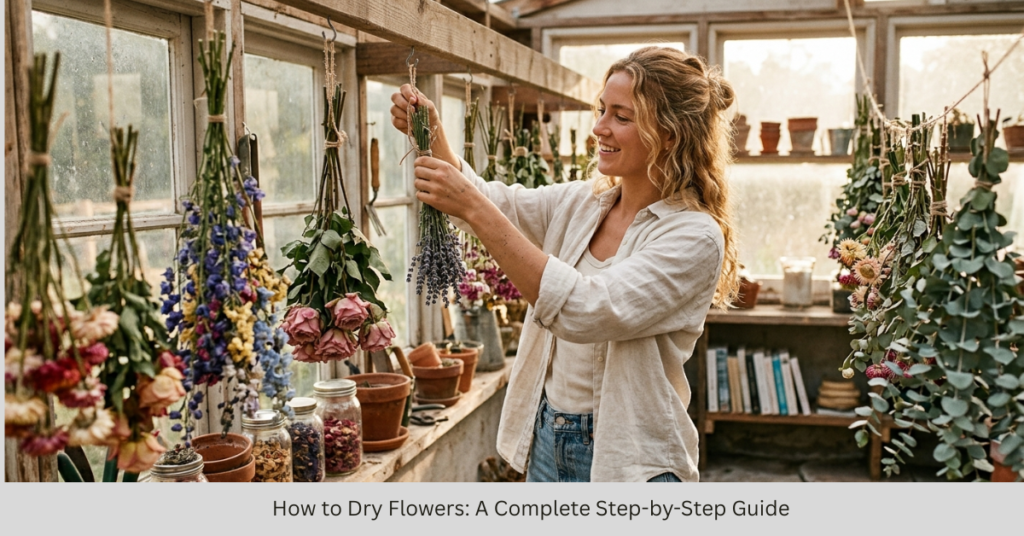
1. Drying Flowers Upside Down
Best for: Roses, peonies, and large blooms
Steps:
- Trim the stems to your desired length.
- Remove excess leaves.
- Tie flowers in small bunches with string.
- Hang them upside down in a dry, dark, and well-ventilated area.
- Leave for 2–3 weeks until completely dry.
Tip: Hanging flowers upside down helps maintain their natural shape and prevents drooping.
2. Drying Flowers in a Book
Best for: Small, delicate flowers like pansies or violets
Steps:
- Place the flower between two sheets of absorbent paper.
- Close the pages of a heavy book.
- Add extra weight on top for better pressing.
- Leave for 1–2 weeks.
Tip: Check occasionally to ensure flowers aren’t molding.
3. Using Silica Gel to Dry Flowers
Best for: Flowers for resin or crafts
Steps:
- Fill an airtight container with silica gel.
- Place flowers in the gel, covering them completely.
- Seal the container and leave for 3–7 days.
- Carefully remove and brush off excess gel.
Tip: Silica gel preserves color better than air drying.
4. Drying Flowers in the Microwave
Best for: Quick preservation of small blooms
Steps:
- Place flowers in a microwave-safe container with silica gel.
- Microwave in 30-second intervals on low heat.
- Check progress frequently.
- Allow flowers to cool before handling.
Tip: This method is ideal for those wondering how to dry flowers quickly without compromising color.
5. Drying Flowers in the Oven
Best for: Bulk drying or fast results
Steps:
- Preheat oven to the lowest setting (around 100°C / 210°F).
- Spread flowers on a baking sheet lined with parchment paper.
- Bake for 1–3 hours, checking regularly.
Tip: Oven drying works well for sturdy flowers but may slightly fade colors.
6. Drying Flowers Flat
Best for: Crafts, framing, or card-making
Steps:
- Place flowers between sheets of parchment paper.
- Stack under heavy books or boards.
- Leave for 1–3 weeks.
Tip: Flat drying is perfect for preserving intricate petal shapes.
Tips for Drying Flowers Without Losing Color
- Avoid direct sunlight while drying
- Remove moisture promptly to prevent mold
- Use silica gel for vibrant colors
- Handle flowers gently
These strategies ensure your dried blooms look as beautiful as the day you picked them.
FAQs About Drying Flowers
Q1: How long does it take to dry flowers naturally?
A: Air-drying typically takes 2–3 weeks, depending on the flower type and humidity.
Q2: Can all flowers be dried for resin?
A: Most flowers can, but delicate blooms work best with silica gel for color preservation.
Q3: How to dry flowers fast at home?
A: Using a microwave or oven speeds up the process significantly.
Q4: Do dried flowers last forever?
A: Properly dried flowers can last for years if kept away from moisture and sunlight.
Q5: Can I dry flowers without them losing shape?
A: Hanging upside down or using silica gel helps flowers maintain their natural form.
Conclusion
Learning how to dry flowers opens up endless creative possibilities—from home décor to personalized gifts. Whether you prefer the traditional upside-down method, pressing in a book, or using silica gel, each technique has its benefits. Experiment with different flowers and methods to see which works best for your project. Once dried, these blooms can brighten your space or become timeless keepsakes. Start drying flowers today and enjoy their beauty all year round!