
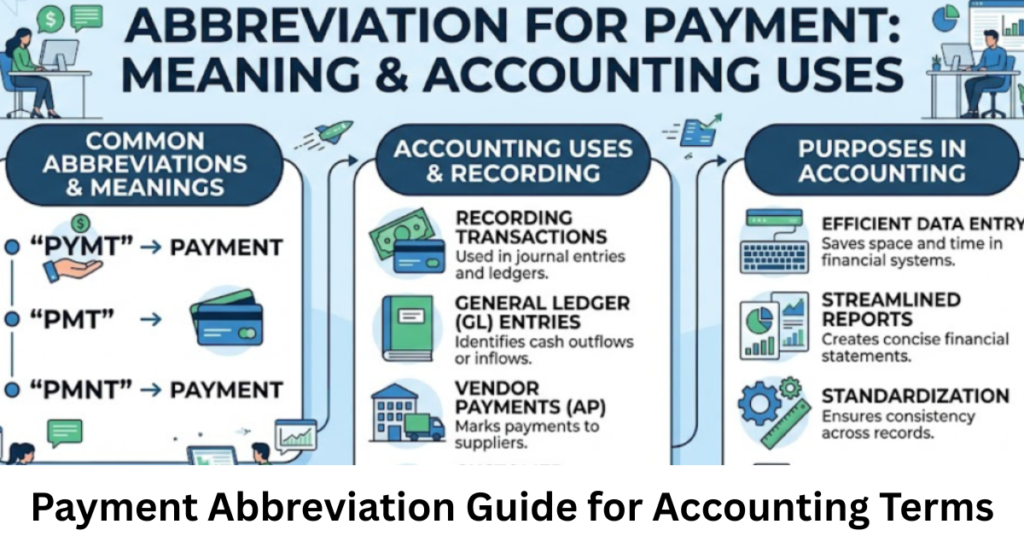

Have you ever seen terms like Pmt, Pd, Amt Due, or EFT on an invoice, bank statement, or accounting sheet and wondered what they mean? These short forms are known as payment abbreviation terms, and they are used to save space, speed up communication, and simplify financial records.
From online banking to bookkeeping systems, abbreviations related to payments appear everywhere. Understanding them can help business owners, students, freelancers, and everyday users read statements correctly and avoid confusion. In this guide, we’ll break down the most common terms, explain payment abbreviation in accounting, and show where each one is used.
What Is a Payment Abbreviation?
A payment abbreviation is a shortened form of a word or phrase related to money transactions. Instead of writing full terms like “payment received” or “electronic funds transfer,” businesses often use quick codes or short labels.
These abbreviations are common in:
- Invoices
- Receipts
- Payroll records
- Bank statements
- Accounting software
- Tax documents
- Online checkout systems
They save time and make documents easier to scan.
Why Payment Abbreviations Matter
Using short forms may seem minor, but they play an important role in finance.
Benefits Include:
- Faster data entry
- Cleaner invoices and statements
- Standardized accounting records
- Easier reporting
- Better communication between finance teams
For example, instead of writing “Payment Received,” many systems simply use PMT RCVD.
Common Payment Abbreviation Terms
Below are some of the most widely used payment-related short forms.
| Abbreviation | Meaning |
|---|---|
| PMT | Payment |
| PD | Paid |
| BAL | Balance |
| DUE | Amount Due |
| INV | Invoice |
| RCVD | Received |
| REF | Refund / Reference |
| EFT | Electronic Funds Transfer |
| ACH | Automated Clearing House |
| CC | Credit Card |
| COD | Cash on Delivery |
| DD | Direct Debit |
These terms often appear on bills, receipts, and financial records.
Payment Abbreviation in Accounting
In bookkeeping and finance departments, abbreviations are essential because large volumes of transactions must be recorded quickly.
Common Accounting Short Forms
| Short Form | Accounting Meaning |
|---|---|
| AP | Accounts Payable |
| AR | Accounts Receivable |
| PMT | Payment Entry |
| DEP | Deposit |
| INT | Interest |
| TXN | Transaction |
| REV | Revenue |
| EXP | Expense |
When reviewing ledgers or software entries, understanding payment abbreviation in accounting helps interpret reports accurately.
Examples of Payment Abbreviations on Statements
You may see short forms like these on a bank statement:
- ACH PMT – Automated payment transfer
- CC PMT – Credit card payment
- DEP PMT – Deposited payment
- PMT REF – Payment reference number
- AUTO PMT – Automatic scheduled payment
These descriptions vary by bank or software provider.
Payment Terms Used in Business Invoices
Invoices often contain abbreviations linked to payment deadlines.
Common Invoice Codes
- Net 30 – Pay within 30 days
- Net 15 – Pay within 15 days
- PIF – Paid in Full
- Amt Due – Amount Due
- Bal Due – Remaining balance due
Knowing these helps businesses manage cash flow and avoid late fees.
How to Use Payment Abbreviations Correctly
While abbreviations save time, they should be used clearly.
Best Practices
- Use standard industry terms.
- Avoid creating random short forms.
- Add a legend on invoices if needed.
- Be consistent across all documents.
- Use full wording for customers if confusion is possible.
For example, internal staff may understand PMT, but clients may prefer “Payment.”
Common Mistakes to Avoid
1. Using Unclear Terms
Not everyone understands internal codes.
2. Mixing Different Styles
Using PMT on one invoice and PAY on another creates confusion.
3. Overusing Abbreviations
Too many codes can make documents hard to read.
4. Ignoring Regional Differences
Some terms vary by country or industry.
Digital Payment Abbreviations You Should Know
As online payments grow, new short forms appear regularly.
- UPI – Unified Payments Interface
- POS – Point of Sale
- OTP – One-Time Password
- QR Pay – QR code payment
- BNPL – Buy Now Pay Later
These are common in mobile wallets and e-commerce platforms.
FAQs
What is the abbreviation for payment?
The most common abbreviation is PMT. Some systems may also use PAY depending on software or region.
What does PMT mean in accounting?
PMT usually stands for payment, especially in ledgers, invoices, or transaction records.
What is payment abbreviation in accounting software?
Common examples include PMT, DEP, AR, AP, and TXN.
What does PIF mean on an invoice?
PIF means Paid in Full, indicating no balance remains.
Why do banks use payment abbreviations?
Banks use abbreviations to fit transaction descriptions into limited space and keep statements organized.
Conclusion
Understanding payment abbreviation terms can save time, reduce mistakes, and help you read invoices, statements, and financial records with confidence. Whether you’re reviewing bills or learning payment abbreviation in accounting, knowing these short forms makes money management easier.
If you frequently handle invoices or bookkeeping, keep a list of common abbreviations nearby and learn the ones used in your industry. A small bit of knowledge can prevent big misunderstandings.