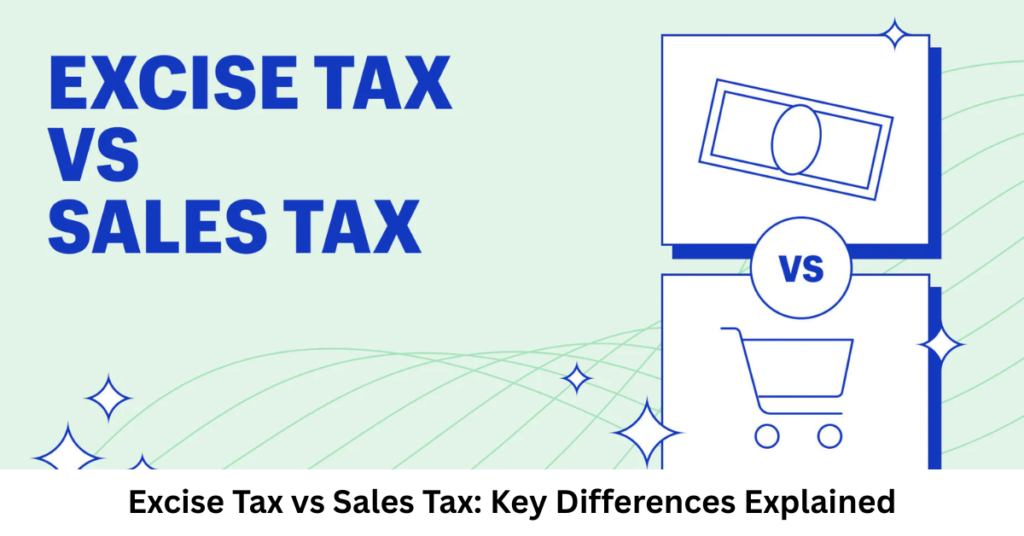

Taxes affect every purchase we make, whether we notice them or not. When you shop, travel, or even fuel your car, you constantly pay different types of taxes. One common question people ask is: how is an excise tax different from a sales tax?
Both taxes increase the cost of goods, but they work in completely different ways. In this article, we break down both tax types in a simple and clear way so you can understand exactly how they affect your money.
What Is Sales Tax?
Sales tax applies when you buy most goods or services. The government adds it directly at the time of purchase, and you see it clearly on your bill.
Key Features of Sales Tax:
- Governments charge it at the point of sale
- Consumers pay it directly
- It applies to many goods and services
- Tax rates vary by region
For example, if you buy a product for $100 and the sales tax rate stands at 10%, you pay $110 at checkout.
So, sales tax directly increases your final bill.
What Is Excise Tax?
Excise tax targets specific goods or activities instead of applying to everything. Governments add this tax earlier in the supply chain, usually during production or manufacturing.
Products that often include excise tax:
- Fuel
- Alcohol
- Tobacco
- Air travel tickets
- Certain luxury goods
Manufacturers or importers pay this tax first, and then they include it in the product price. As a result, consumers usually do not see it separately.
How Is an Excise Tax Different from a Sales Tax?
Now let’s clearly answer the main question: how is an excise tax different from a sales tax?
1. Type of Goods
- Sales tax applies to almost all goods and services
- Excise tax applies only to selected products
2. When It Applies
- Sales tax applies when you purchase an item
- Excise tax applies during production or import
3. Visibility
- Sales tax appears on receipts
- Excise tax hides inside the product price
4. Purpose
- Governments use sales tax to generate general revenue
- Governments use excise tax to control consumption of specific goods
5. Who Ultimately Pays
- Consumers directly pay sales tax
- Consumers indirectly pay excise tax after businesses pass the cost forward
Real-Life Example
Let’s take a simple example of buying fuel:
- The government first adds an excise tax during fuel production.
- The fuel company includes that tax in the final price.
- When you go to the petrol pump, you also pay sales tax on the total amount.
So, you end up paying both taxes, but at different stages of the supply chain.
Why Governments Use Excise Taxes
Governments use excise taxes for more than just raising money. They also shape public behavior.
They use excise taxes to:
- Discourage smoking and alcohol consumption
- Reduce environmental damage from fuel usage
- Collect higher revenue from luxury goods
Unlike sales tax, excise tax focuses on specific products that impact health or the environment.
Key Differences in Simple Terms
- Sales tax applies broadly and shows up at checkout
- Excise tax targets specific goods and hides in prices
- Sales tax affects most purchases
- Excise tax affects limited products
Both taxes increase government revenue, but they work in different ways.
FAQs
1. How is an excise tax different from a sales tax in simple words?
Excise tax applies to specific goods at production, while sales tax applies to most purchases at checkout.
2. Do consumers pay both taxes?
Yes, consumers often pay both, but businesses collect excise tax earlier in the process.
3. Can you see excise tax on receipts?
Usually no, because businesses include it in the product price.
4. Which tax affects more products?
Sales tax affects more products, while excise tax targets limited items.
5. Why do governments prefer excise taxes?
They use excise taxes to reduce harmful consumption and control specific industries.
Conclusion
Understanding how is an excise tax different from a sales tax? helps you see how governments structure pricing behind everyday goods. Sales tax applies at checkout and affects most purchases, while excise tax applies earlier and targets specific products.
Both taxes play important roles in the economy, but they influence your spending in different ways. Once you understand the difference, you can better interpret prices and manage your expenses more wisely.