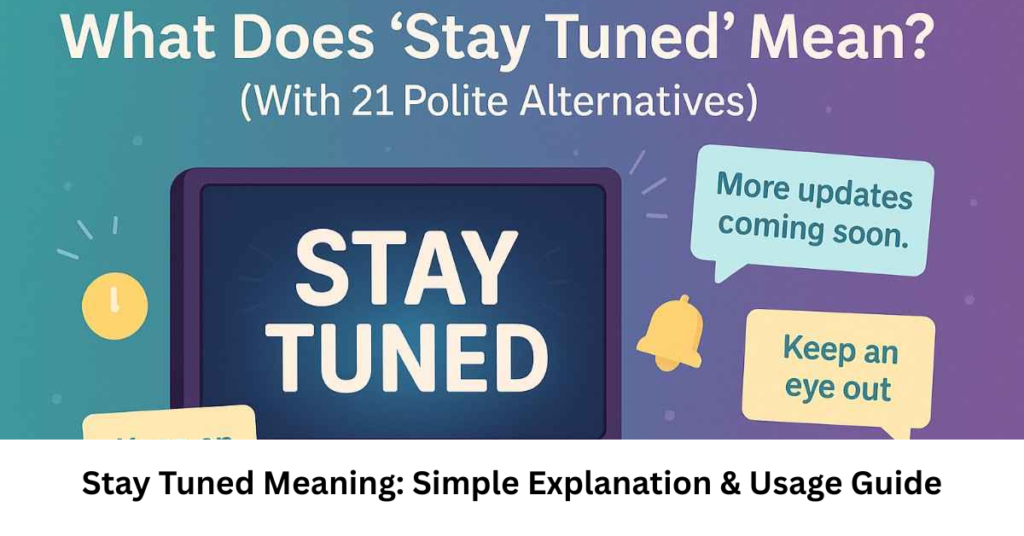

Ever heard someone say “stay tuned” and wondered what it actually means? The phrase stay tuned meaning is commonly used in conversations, social media, TV shows, and even marketing—but its real purpose goes beyond just sounding catchy.
In simple terms, stay tuned meaning refers to asking someone to wait for more updates or information that will be shared soon. It’s a way of saying “don’t go anywhere, something important or interesting is coming next.”
In this article, we’ll break down the stay tuned meaning, its origin, how to use it in daily life, and why it has become so popular in modern communication.
What Does “Stay Tuned” Mean?
The stay tuned meaning is quite straightforward:
It means “keep paying attention because more information will follow.”
Originally, the phrase came from radio and television broadcasting. Viewers or listeners were asked to “stay tuned” to the same channel for upcoming segments or news updates.
Today, the phrase is used in many different ways, including:
- Social media posts
- YouTube videos
- Text messages
- Business announcements
- Entertainment teasers
So, whenever you see or hear “stay tuned,” it simply means more content is coming soon.
Origin of the Phrase “Stay Tuned”
Understanding the stay tuned meaning becomes easier when we look at its origin.
The phrase comes from early radio broadcasting in the 1920s and 1930s. Back then, people had to manually adjust (or “tune”) their radio frequencies to stay connected to a channel.
Broadcasters would say “stay tuned” to remind listeners to keep their radios on the same frequency for upcoming programs.
Over time, the phrase moved into television and later digital media, where it still carries the same idea—stay connected for updates.
How to Use “Stay Tuned” in Daily Life
The modern stay tuned meaning is flexible and can be used in many situations. Let’s look at how people commonly use it:
1. Social Media Updates
Creators often use it when teasing new content:
- “Big announcement coming tomorrow—stay tuned!”
2. Business Announcements
Companies use it to build anticipation:
- “New product launch next week. Stay tuned!”
3. Conversations
Even in casual talk, it fits naturally:
- “I’ll tell you the full story later, stay tuned.”
4. Entertainment Industry
Movies, dramas, and music industries use it for promotions:
- “Trailer releasing soon. Stay tuned!”
In all these examples, the stay tuned meaning remains the same—something more is coming.
Why Do People Say “Stay Tuned”?
There are a few psychological and marketing reasons behind its popularity:
1. Builds Curiosity
People naturally want to know what happens next.
2. Creates Anticipation
It keeps the audience excited and engaged.
3. Improves Engagement
Brands and creators use it to make people come back for updates.
4. Simple and Catchy
It’s short, easy to remember, and works in almost any context.
So when someone says “stay tuned,” it’s not just a phrase—it’s a strategy to keep attention.
Different Contexts of “Stay Tuned Meaning”
The stay tuned meaning can slightly change depending on where it is used:
Informal Use
Used in everyday conversation:
- “I have news for you, stay tuned.”
Professional Use
Used in announcements or marketing:
- “Stay tuned for our quarterly report.”
Entertainment Use
Used for teasers:
- “Stay tuned for episode 5 release.”
Even though the context changes, the core meaning remains the same—more information is on the way.
Common Alternatives to “Stay Tuned”
If you want to avoid repeating the phrase, here are some similar expressions:
- “More updates coming soon”
- “Keep watching”
- “More details to follow”
- “Don’t miss out”
- “Coming soon”
These alternatives carry a similar stay tuned meaning but can make your writing more diverse.
Examples in Sentences
Here are some natural examples to help you understand better:
- “We are launching a new feature soon, stay tuned!”
- “The final results will be announced tomorrow, stay tuned.”
- “Stay tuned for more exciting updates about the event.”
- “I can’t reveal everything yet, so stay tuned.”
Each example shows how flexible the phrase is in modern communication.
Why “Stay Tuned” Is So Popular Today
The popularity of the stay tuned meaning has grown massively due to digital media. Here’s why:
- Social media platforms rely on engagement
- Content creators want viewers to return
- Brands use suspense for marketing campaigns
- Audiences enjoy curiosity-driven content
In short, it’s a powerful communication tool in the digital age.
FAQs About Stay Tuned Meaning
1. What does stay tuned meaning exactly refer to?
It means to wait for more information or updates that will be shared soon.
2. Is “stay tuned” formal or informal?
It can be both, but it is mostly used in informal and marketing contexts.
3. Can I use “stay tuned” in emails?
Yes, especially in newsletters or announcements.
4. What is the origin of stay tuned?
It comes from early radio broadcasting, where listeners had to stay on the same frequency for updates.
5. What is another word for stay tuned?
You can use phrases like “more updates coming soon” or “keep watching.”
Conclusion
The stay tuned meaning is simple yet powerful—it encourages people to wait for more updates or information. From its origins in radio broadcasting to its modern use in social media and marketing, the phrase has evolved but kept its core idea intact.
Whether you’re creating content, sending a message, or making an announcement, using “stay tuned” adds curiosity and engagement. Just remember, it’s all about keeping your audience interested and coming back for more.
So next time you hear it, you’ll know exactly what it means—something exciting is on the way, and you shouldn’t miss it.