
Have you ever paused mid-sentence, wondering whether to write “inconsolable or unconsolable”? You’re not alone. This small spelling dilemma confuses writers, students, and even professionals.
The good news? The answer is simpler than it seems. In this guide, we’ll break down the correct usage, meaning, and subtle differences (if any), so you can write with confidence every time.
Inconsolable vs Unconsolable — The Quick Answer
Let’s clear things up right away:
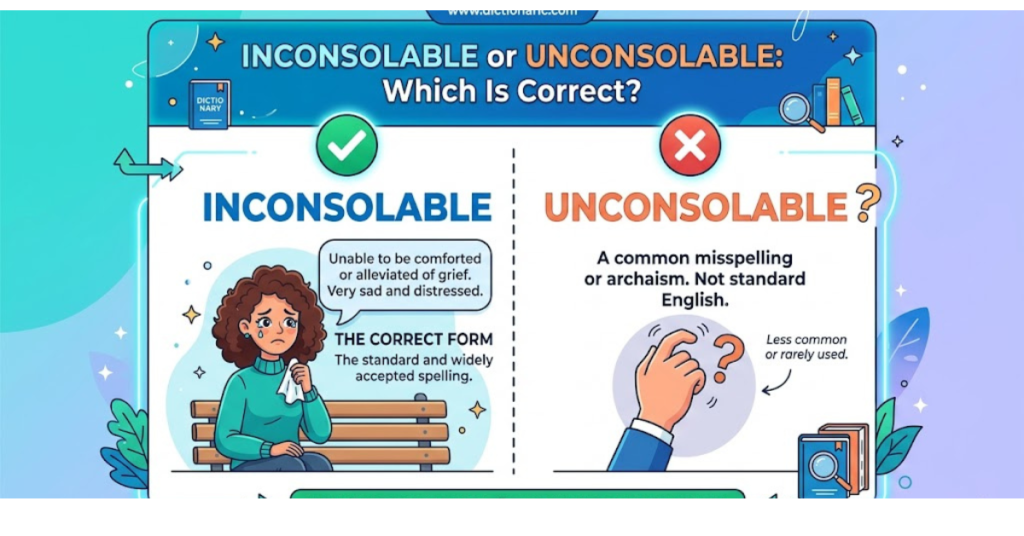
- Inconsolable – Correct and widely accepted
- Unconsolable – Rare, considered nonstandard or incorrect
In modern English, “inconsolable” is the standard spelling used in dictionaries, academic writing, and everyday communication.
What Does “Inconsolable” Mean?
Definition
Inconsolable describes someone who cannot be comforted, especially during intense sadness or grief.
Simple Explanation
If a person is inconsolable, nothing you say or do can make them feel better.
Example Sentences
- She was inconsolable after losing her pet.
- The child became inconsolable when his mother left the room.
- He remained inconsolable despite everyone trying to cheer him up.
Why Do People Say “Unconsolable”?
The confusion between inconsolable or unconsolable comes from how English prefixes work.
Prefix Breakdown
- In- = “not” (common in Latin-based words)
- Un- = “not” (common in everyday English)
Because both prefixes mean “not,” people sometimes assume they’re interchangeable. However, English doesn’t always follow strict rules here.
The Reality
- “Inconsolable” follows traditional word formation
- “Unconsolable” sounds logical but isn’t standard
Think of it like this: not every “un-” version of a word actually exists in proper English.
Is “Unconsolable” Ever Correct?
Technically, “unconsolable” may appear in informal writing or older texts, but:
- It’s not widely accepted
- It’s rarely found in major dictionaries
- It may weaken your writing credibility
If you want to stay safe, always choose “inconsolable.”
Common Mistakes to Avoid
When deciding between inconsolable or unconsolable, watch out for these errors:
- Using “unconsolable” in formal writing
- Assuming both spellings are equally correct
- Mixing prefixes randomly
Quick Tip
If you’re unsure, remember:
“Inconsolable” is the standard. No second guessing needed.
Similar Words You Should Know (LSI Keywords)
To improve your vocabulary and writing, here are related terms:
- Devastated
- Heartbroken
- Grief-stricken
- Miserable
- Distraught
- Sorrowful
These words can sometimes replace “inconsolable” depending on context.
When to Use “Inconsolable” in Writing
You’ll commonly use inconsolable in:
Emotional Contexts
- Loss of a loved one
- Breakups
- Personal tragedy
Creative Writing
- Storytelling
- Poetry
- Descriptive scenes
Everyday Conversations
- “She was inconsolable after the exam results.”
FAQs About Inconsolable or Unconsolable
1. Is unconsolable a real word?
It exists informally, but it’s not considered standard English. “Inconsolable” is the correct choice.
2. Why is inconsolable preferred over unconsolable?
Because it follows traditional English word formation and is recognized by dictionaries.
3. Can I use unconsolable in casual writing?
You can, but it’s better to avoid it—even casually—to maintain clarity and correctness.
4. What is the opposite of inconsolable?
Words like comforted, relieved, or soothed are good opposites.
5. Is inconsolable formal or informal?
It works in both formal and informal contexts.
Conclusion
When it comes to inconsolable or unconsolable, the verdict is clear: “inconsolable” is the correct and widely accepted term. While “unconsolable” might seem logical, it’s best left out of polished writing.
The next time you’re describing deep sadness or emotional distress, you won’t have to hesitate. Stick with inconsolable, and your writing will sound natural, accurate, and confident.