
You’ve probably seen both versions—make do and make due—and wondered which one is actually correct. You’re not alone. The phrase “make do or make due” is one of those commonly confused expressions that trips up even confident writers.
Here’s the short answer: “make do” is correct, while “make due” is almost always a mistake. But there’s more to it than that. In this article, we’ll break down the meaning, origin, correct usage, and examples so you’ll never second-guess it again.
What Does “Make Do” Mean?
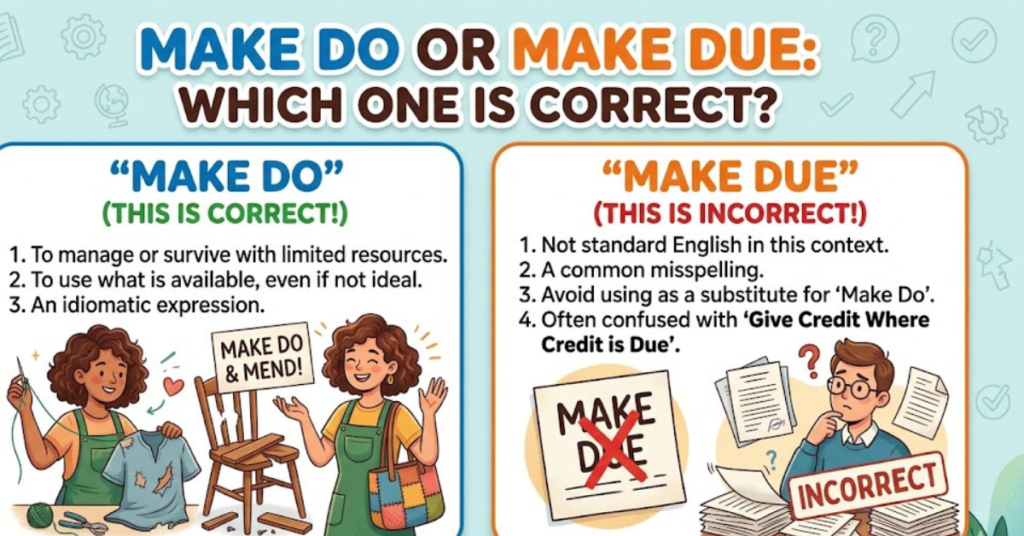
The phrase “make do” means to manage with what you have, even if it’s not ideal. It’s about improvising or getting by with limited resources.
Example Sentences:
- We didn’t have enough chairs, so we had to make do with cushions on the floor.
- I forgot my charger, but I’ll make do until I get home.
Key Idea:
When you make do, you adapt instead of waiting for something better.
Is It “Make Do or Make Due”?
Let’s settle it clearly:
- Make do → Correct
- Make due → Incorrect (in most contexts)
Why Do People Say “Make Due”?
The confusion comes from the word “due,” which means something owed or expected. Since it sounds similar to “do,” people often assume it fits the phrase—but it doesn’t.
“Make due” has no real meaning in standard English, which is why it’s considered a mistake.
The Origin of “Make Do”
Understanding the origin makes it easier to remember.
The phrase comes from older English usage where “do” meant to perform or carry out an action. So “make do” literally meant make something work.
Over time, it evolved into the modern meaning:
to cope or manage with available resources
When Should You Use “Make Do”?
You’ll use make do when talking about situations where:
- You lack ideal resources
- You need to improvise
- You’re dealing with limitations
Common Situations:
- Financial constraints
- Limited tools or materials
- Unexpected problems
Quick Examples:
- “We didn’t have ingredients, so we made do with what was in the fridge.”
- “The hotel wasn’t great, but we made do for one night.”
Common Mistakes and How to Avoid Them
Here’s how to make sure you always get it right:
Incorrect:
- “We had to make due with what we had.”
Correct:
- “We had to make do with what we had.”
Easy Memory Trick:
Think of it this way:
“Do” = action → making something work
“Due” = obligation → doesn’t fit here
Related Phrases and Synonyms
If you want variety in your writing, here are similar expressions:
- Get by
- Manage
- Improvise
- Cope
- Make the best of it
Example:
- “We’ll just make the best of it” = same idea as “make do”
Why This Confusion Matters for Writing
Using the wrong phrase can:
- Reduce credibility in professional writing
- Affect SEO performance
- Confuse readers
Search engines and readers both favor accurate, natural language, so sticking with “make do” helps your content perform better.
FAQs About “Make Do or Make Due”
1. Is it make do or make due?
It is make do. “Make due” is incorrect in standard English.
2. What does “make do” mean?
It means to manage or cope with what you have, even if it’s not ideal.
3. Is “make due” ever correct?
Almost never. “Due” is used in different contexts (like “payment is due”), not in this phrase.
4. Why do people confuse make do and make due?
Because they sound the same when spoken, leading to spelling mistakes.
5. Can I use “make do” in formal writing?
Yes, it’s perfectly acceptable in both formal and informal contexts.
Conclusion
So, next time you’re stuck choosing between make do or make due, remember this:
“Make do” is the correct phrase—and the only one you should use.
It’s all about adapting, improvising, and making things work with what you have. Whether you’re writing an email, an essay, or a blog post, using the correct form keeps your communication clear and professional.