
Ever caught yourself wondering whether it’s puddy or putty? You’re not alone. It’s a surprisingly common confusion, especially since both words sound almost identical when spoken.
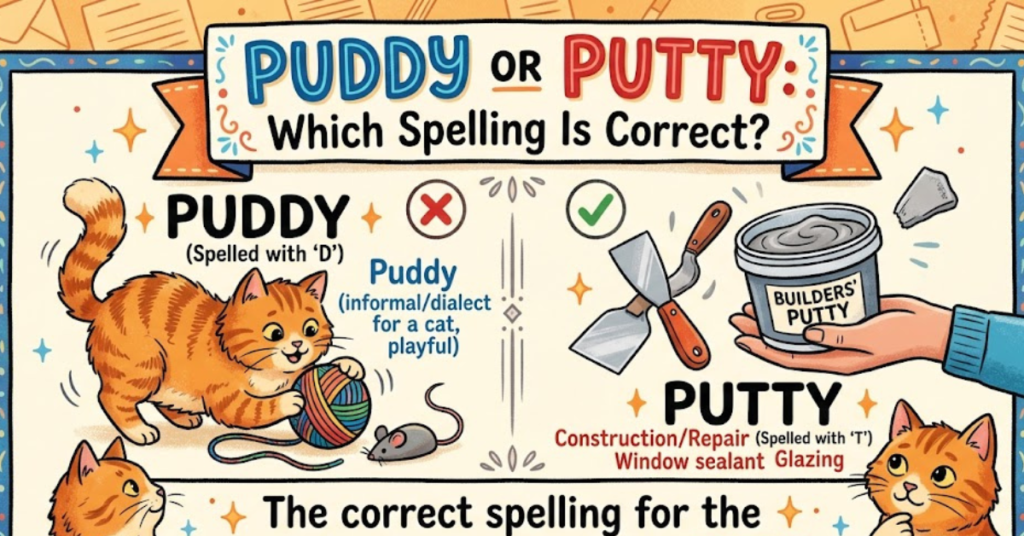
Here’s the short answer: “putty” is the correct and widely accepted spelling, while “puddy” is usually a misspelling—though it can appear in slang or fictional contexts.
In this guide, we’ll break down everything you need to know about puddy or putty, including meanings, usage, examples, and why the confusion happens in the first place.
What Does “Putty” Mean?
Definition of Putty
Putty is a soft, pliable material commonly used in construction, repairs, and even crafts. It’s most often associated with sealing glass in windows or filling cracks and holes.
Common Uses of Putty
You’ll typically see putty used in:
- Home improvement: Filling gaps, cracks, or nail holes
- Glass installation: Securing window panes
- Plumbing: Sealing joints and fixtures
- Crafts and DIY: Modeling or sculpting material
Example Sentences
- “Apply some putty to fill the cracks before painting.”
- “The window was secured using glazing putty.”
Is “Puddy” a Real Word?
When “Puddy” Appears
Technically, puddy is not a standard English word. However, it can show up in a few informal situations:
- Misspelling of “putty”
- Slang or dialect usage
- Fictional names or characters
For example, in pop culture, “Puddy” might be used as a character name, but that doesn’t make it a correct substitute for putty in general writing.
Key Takeaway
If you’re writing professionally, academically, or even casually online, you should almost always use “putty” instead of “puddy.”
Why Do People Confuse “Puddy or Putty”?
1. Similar Pronunciation
Both words sound nearly identical, especially in fast or casual speech.
2. Typing Errors
It’s easy to hit “d” instead of “t” on a keyboard—especially when typing quickly.
3. Lack of Familiarity
Many people don’t use the word putty often, so they rely on how it sounds rather than how it’s spelled.
Putty in Everyday Language and Industry
Types of Putty
There are several kinds of putty depending on the application:
- Glazing putty: Used for window panes
- Wood putty: Fills holes in wood surfaces
- Plumber’s putty: Seals plumbing fixtures
- Epoxy putty: Strong, moldable adhesive
Where You’ll Encounter It
- Construction sites
- Hardware stores
- DIY home projects
- Art and craft studios
Puddy vs Putty: Quick Comparison
| Feature | Putty | Puddy |
| Correct spelling | Yes | No (usually incorrect) |
| Meaning | Sealing or modeling material | No standard meaning |
| Usage | Professional & everyday | Slang or misspelling |
| Example | “Use putty to seal cracks” | Rare or fictional contexts |
Tips to Remember the Correct Spelling
If you keep mixing up puddy or putty, try these simple tricks:
- Think of “T” for tools → Putty is used with tools and repairs
- Double “T” = Tough material
- Associate it with hardware stores, where “putty” is the correct term
FAQs About Puddy or Putty
1. Is “puddy” ever correct?
In standard English, no. It’s usually a misspelling of putty, unless used as a name or slang.
2. What is putty used for?
Putty is used for sealing, filling, and repairing surfaces—especially in construction and DIY work.
3. Why do people say “puddy”?
Mostly due to pronunciation habits or simple spelling mistakes.
4. Can I use “puddy” in formal writing?
No. Always use putty in formal, academic, or professional contexts.
5. Are there different types of putty?
Yes, including glazing putty, wood putty, plumber’s putty, and epoxy putty.
Conclusion
When it comes to puddy or putty, the answer is clear: “putty” is the correct spelling and the one you should use in almost every situation. While “puddy” may pop up occasionally, it’s not considered standard English.
Understanding the difference not only improves your writing but also helps you communicate more clearly—whether you’re talking about DIY repairs or simply avoiding a common spelling mistake.
If you found this helpful, consider exploring related topics like spelling confusions, grammar tips, or DIY home improvement guides.