
Have you ever typed “trama” when you actually meant “trauma”? You’re not alone. The confusion around trama vs trauma is surprisingly common, especially in fast typing or casual writing. But here’s the thing—only one of these words is correct in standard English.
In this article, we’ll break down the difference between trama vs trauma, explain what “trauma” really means, and show you how to avoid this mistake for good. Whether you’re writing an essay, a social media post, or just trying to improve your vocabulary, this guide has you covered.
What Does “Trauma” Mean?
Trauma is a real and widely used English word. It refers to a deeply distressing or disturbing experience—either physical or emotional.
Types of Trauma
Trauma isn’t just one thing. It can show up in different ways:
- Emotional Trauma: Caused by distressing life events like loss, abuse, or accidents
- Physical Trauma: Injury to the body, such as wounds or fractures
- Psychological Trauma: Long-term mental impact from stressful experiences
Example Sentences
- She is still healing from childhood trauma.
- The accident caused severe physical trauma.
- Therapy can help people cope with emotional trauma.
What Does “Trama” Mean?
Here’s the simple truth: “trama” is not a correct English word in most contexts.
Why Do People Use “Trama”?
There are a few reasons why “trama” appears:
- Typing error (missing the “u” in trauma)
- Autocorrect mistakes
- Confusion with words from other languages (e.g., “trama” in Spanish can mean “plot”)
Key Takeaway
If you’re writing in English and referring to emotional or physical distress, “trauma” is always the correct choice—not “trama.”
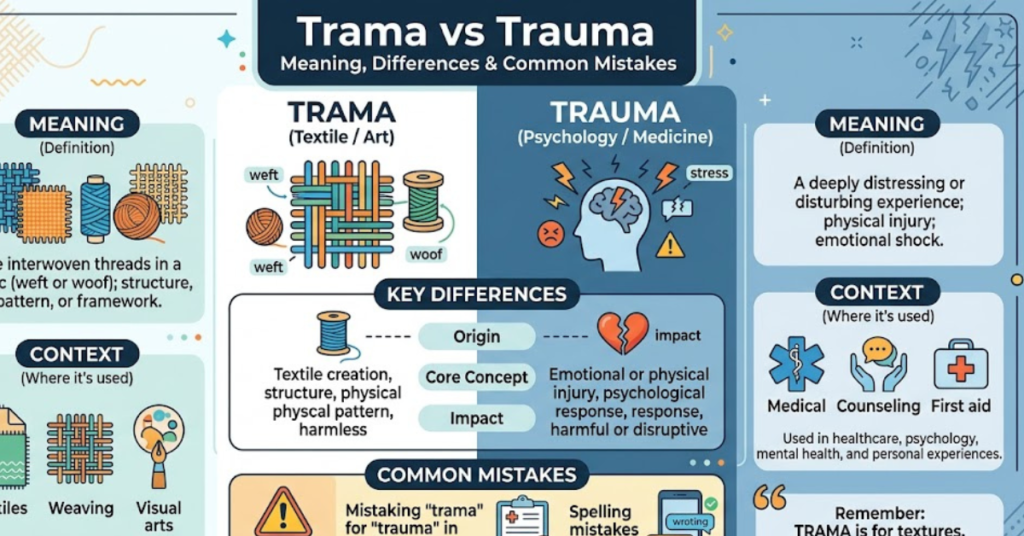
Trama vs Trauma: Key Differences
Let’s make it crystal clear:
| Aspect | Trama | Trauma |
| Correct Word | No (in English context) | Yes |
| Meaning | None (or foreign language use) | Emotional or physical distress |
| Usage | Typo or error | Proper English usage |
Confusing trama vs trauma is easy—but also easy to fix.
1. Watch Your Spelling
Always double-check if you’ve included the “u” in trauma.
2. Use Spell Check Tools
Most tools like Grammarly or built-in editors will flag “trama” as incorrect.
3. Read Before You Submit
A quick reread can catch small mistakes like this.
4. Learn the Meaning
When you understand what trauma means, you’re less likely to misspell it.
Why “Trauma” Matters in Real Life
Understanding the word trauma isn’t just about spelling—it’s about awareness. Trauma is a serious topic in mental health and medicine.
People experiencing trauma may need:
- Emotional support
- Professional therapy
- Time and patience to heal
Using the correct term shows respect and clarity when discussing sensitive topics.
Related Terms (LSI Keywords)
To deepen your understanding of trama vs trauma, here are related terms often used alongside “trauma”:
- Emotional distress
- Mental health
- PTSD (Post-Traumatic Stress Disorder)
- Psychological impact
- Healing and recovery
FAQs About Trama vs Trauma
1. Is “trama” ever correct in English?
No, “trama” is generally incorrect in English unless you’re referring to a foreign-language context like Spanish literature.
2. Why do people confuse trama vs trauma?
Mostly بسبب typing errors, autocorrect issues, or unfamiliarity with the correct spelling.
3. What is the correct spelling: trama or trauma?
Trauma is the correct spelling in English.
4. Can trauma be both physical and emotional?
Yes, trauma can affect both the body and the mind.
5. How can I remember the correct spelling?
Think of “trauma” as needing extra care—just like the word itself needs that extra “u.”
Conclusion
When it comes to trama vs trauma, the difference is simple but important. “Trama” is a mistake in English, while “trauma” is a meaningful word that describes serious physical or emotional experiences.
Getting this right not only improves your writing but also helps you communicate more clearly—especially when discussing sensitive topics like mental health.